

The Post Literate Society
Modern movements are built on "vibes?"

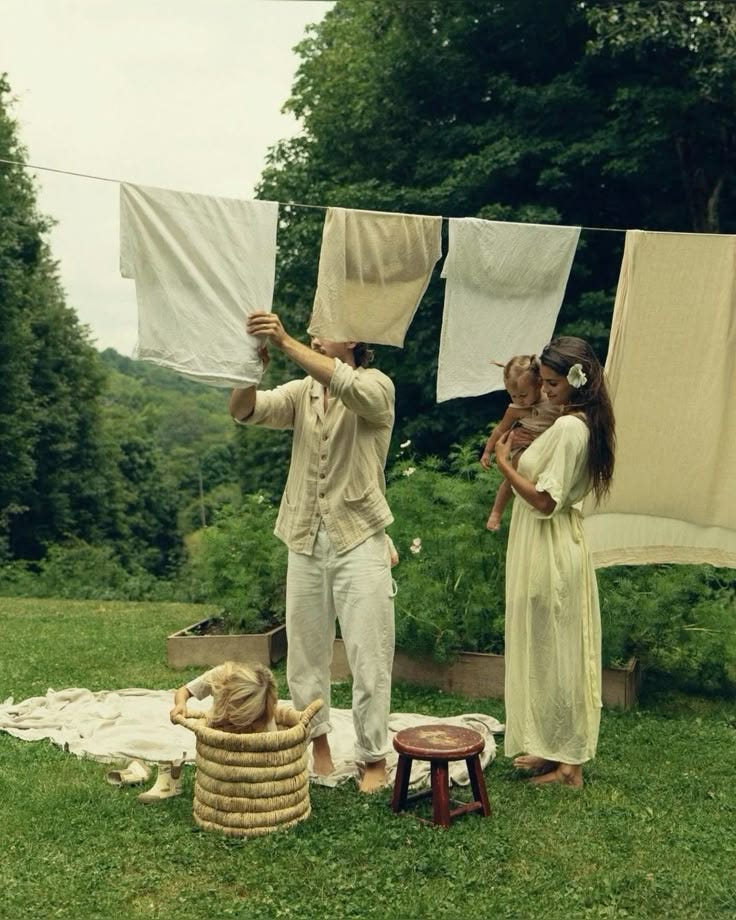
Write & Lift is an ethos of personal and spiritual development through conscious physical exertion and practice of the writing craft. Through this effort to strengthen our bodies and minds, we become anti-fragile and self-respecting sovereign individuals.
The Post Literate Society
A video went viral last week showing a “trad” wife making chocolate chip cookies from scratch.
She churned the butter, roasted and ground the cacao pods, kneaded the dough, and presented the finished product to her Crocodile Dundee husband with a smile.

It’s an engaging watch, but about as “trad” as a reality TV show about monks. Yet, we struggle to in our discernment to see such things as they are. The images and aesthetics of the “content” world often present things as they should be (according to the creator), but the subtext goes over our heads.
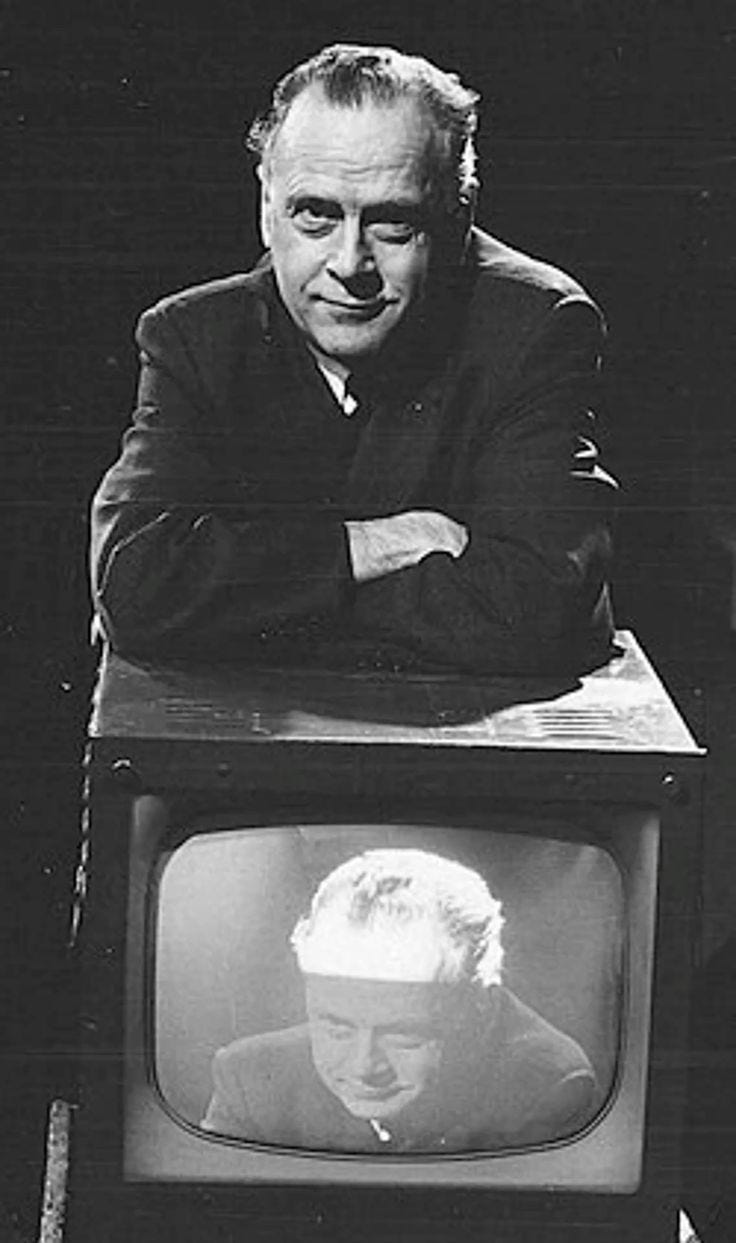
Communications theorist Marshall McLuhan said, “The medium is the message.” He argues that what we call the “content” of a medium is subconscious bait; flashy and attention-grabbing, used to keep the mind occupied, while the medium's deeper influence slips by unnoticed.
Staged and at times mildly pornographic “trad” content is a clear example demonstrating McLuhan’s thesis at scale. The gingham-clad trad-wife—filming in her highly curated kitchen—is indulging in an imagined aesthetic. It is not, in any way, counter-cultural. It’s curated and selective.
There is no home economics practicality. She is showing, rather than teaching. The homemade butter is a prop. A symbol of an aesthetic distinction that loosely plays off an image of Puritan simplicity. In all likelihood, bought from a store and placed in the small mason jar of cream before the final edit. It’s an artificial image.
This is not the way of all social media content. But those who seek to educate or offer insight into an alternative way of life are fighting against the inertia of others who wear an aesthetic as a parasocial skin. This is the post-literate society. Decision-making and identity are based on vibes and aesthetics rather than logic or argumentation. A majority fall for it. And what we’re learning at scale is that this is what persuades our behavior, far more than any rational argument or specific insight ever will.
All Lasting Things Have “Legs”
Until now, counterculture movements have been built primarily through a shifting zeitgeist in art, literature, and politics. A gradual transformation, a cresting wave in which inertia meets a point of no return. A layered combination of aesthetics and philosophy. The medium was not defined by a single addictive, omnipresent technology or style.
The Hippie Movement of the 60s was defined by its core values—for better or worse—through which the aesthetics flowed in response. Fiction and philosophy: William S. Burroughs (Naked Lunch), Timothy Leary (tune on, tune in, drop out), Ken Kesey (One Flew Over the Cuckoo’s Nest). Music and art. Politics and war. Eastern spirituality.
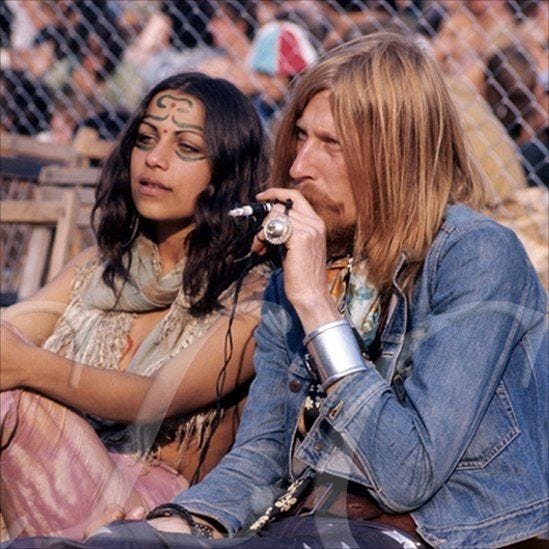
As with all movements, there are gradients in the adherence of its followers, but no one doubted the sincerity of the hippies’ worldview, even if the fruit it bore was often rotten. It had its flash-in-the-pan zenith (Woodstock, the Vietnam protests, and the Haight-Ashbury explosion), but the movement continued to limp on, long after it faded from peak popularity, because it had a core rationale and structure to which it adhered.
Our issue today is that the desire for community, structure, and alternative ways of living is on the rise, but there is little scaffolding to build real-world change beyond simply adopting the aesthetic.
Influenced by the content they’re watching, people are leaving cities to start a back-to-the-land homestead, only to find that the daily grind of managing ten acres of land, constant repairs, and animals was not properly understood.
Teenagers are choosing to go on cocktails of sterilizing hormones to “transition” because of an online sphere of influence that promises liberation from the realities of biological sex.
The aesthetic by which the decision is made is curated, bite-sized, and selective. There is no “body of work,” core doctrine, manifesto, or sweeping philosophical hammer-blow that provides a detailed rationale for embracing an alternative life. There are forums, short-form videos, and activist influencers who present a sanitized aesthetic with a logic that is both contradictory and inches deep. People aren’t thinking before jumping two feet into something; they just do it because it looks cool.
Leveraging Aesthetics
The “whitepill,” if you will, is that any movement, niche, or subculture can grow exponentially based on mass distribution of aesthetics alone. You can create a constant influx of curious new adherents if the image and vibe capture a particular zeitgeist.
The challenge is remembering that to create a true believer over the long term, the aesthetics have to point towards and be grounded in a logic and philosophical framework that provides meaning, structure, and an ethos.
An explosion of interest in Liturgical Christianity, health and fitness, and online entrepreneurship are all examples of social and cultural movements where the aesthetics, when presented honestly and transparently (as a byproduct of the individual creators’ understanding of the ethos), serve as a bridge toward a change in mass consciousness.

An “edit” of Orthodox clergy chanting a Byzantine hymn in a beautiful cathedral is not performative. It does selectively curate an aesthetics; it provides a window into a world that is deeply structured and meaningful. It piques curiosity. It invites someone to ask “why?” For many, it’s the baby step into ten hours of research on church history. Likewise, when a young entrepreneur posts a video showing a journey from being broke to launching a life-changing business, it can spark self-belief in the audience. The pursuit, however, is naturally Darwinian, and those who don’t adhere to a mindset of delayed gratification won’t be able to join the club. In both cases, understanding requires full buy-in to the worldview that made the aesthetic possible.
Our attention spans aren’t going to reset overnight. Most people aren’t willing to sit down for ten hours to read a book to understand the complexities of a particular worldview or idea. Expecting that this will change any time soon is futile. But by understanding this, you can build a bridge with the audience. Think of it as a sales cycle. Prospects rarely buy an expensive service right after they’re shown an ad that speaks to a pain point or desire they’re dealing with. They’re nurtured, pulled down the funnel, and given the resources and insights they need to make an informed decision. Content, when made well, isn’t lying to you; it’s piquing curiosity and opening the door to the depth the worldview or movement offers at a layer deeper. If anything, it says, you need this, but you can’t integrate it unless you’re willing to put in the effort.
Becoming a technological Luddite is both impractical and stupid. Clean up your habits, sure. Avoid the trap of doomscrolling. Trim the list of people you follow. But know that the tool is not limited solely by how the dopamine-fried masses use it. I’m not the only person who has convinced someone to pick up The Count of Monte Cristo by posting an Instagram video.
The paradox of the post-literate society is that “content” is often the route by which we come back to the classics, religion, and philosophy. The initial route in is different, but the result is the same.
As always, thanks for reading.
-Joe
This is a solid take. Many good ideas here. I'm often feeling myself pulled to completely remove social media, but it's a good balance to consider it's unhealthy or at least unrealistic to go cold turkey(and still be healthy). Maybe, for a brief period one can go overboard without media and then allow th pendulum to balance back into a healthy give and take. Shift, adjust, and elevate.
Modern movements ARE built on vibes... but even the new right (which is built more firmly on human nature and sociological data, I think) is largely ineffective. We've all been co-opted into thinking that online activity is meaningful, and that consumption will drive change. I have also considered the trad-wife cultural phenomenon, and the utopians and communalists of the '60s. Are/were they sincere? Did they succeed? If not... why not?
I have spent this entire school year (I'm a middle school Civics teacher) thinking about what might be done to move society back in a healthy direction.
https://jmpolemic.substack.com/p/what-can-be-done